
'When I came here in 2002, I said you can grow at 8%.' 'And I was told that was crazy, and (now) here we are.'

The recurrent increases in fuel prices over the past 10 days are eating into the margins of transporters, who will be forced to pass on the hikes to their customers. This, in turn, is set to make the prices of daily consumables and other goods dearer, affect consumption, and slow economic growth, said transporters and analysts. Freight rates on grand trunk routes have shot up 3-4 per cent month-on-month in the past few days, according to the Indian Foundation of Transport Research & Training (IFTRT).

Indian economy is set for a 'goldilocks' period -- used to describe a timeframe of high growth and low inflation -- while it can become Asia's fastest growing economy in 2016, Japanese financial major Nomura said.

'With the ease of access, we have seen an increased participation from tier-2, tier-3, and tier-4 cities/towns.'

The RBI working group's proposal to allow corporate houses to set up banks is a 'good-looking' step in a 'bad direction' and may lead to crony capitalism and eventual financial instability, former chief economist of World Bank Kaushik Basu said on Thursday. Basu further said that there is a good reason why all successful economies have a clear dividing line between industries and corporations on the one hand, and banks and lending organisations on the other.
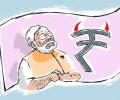
It is a classic case of extremes: The worst contraction in GDP along with the highest-ever levels of cash in the economy; and a severe dent in consumption together with strong growth in bank deposits and digital payments.

'Laws have been used in a way to serve the needs of the current regime and its authoritarian ideology.'

Until recently, average incomes in advanced countries were increasing at much faster rates than in the rest of the world.
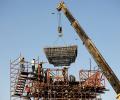
India's economy is unlikely to see double-digit growth and may grow between 8 per cent and 9 per cent this fiscal year (2021-22, or FY22), against the estimated 11.5 per cent, according to leading economists and rating agencies. The downward revision of growth projections to as low as 10 per cent is mostly on account of stringency in restrictions by states, relatively slow vaccination pace, and the possibility of a third wave of the pandemic. However, they say the impact will not be as severe as the first wave, and expect the first quarter to see positive growth.


India's manufacturing sector activities improved in September as companies benefited from strengthening demand conditions amid the easing of COVID-19 restrictions, a monthly survey said on Friday. The seasonally adjusted IHS Markit India Manufacturing Purchasing Managers' Index (PMI) improved from 52.3 in August to 53.7 in September, indicating a stronger expansion in overall business conditions across the sector. The September PMI data pointed to an improvement in overall operating conditions for the third straight month. In PMI parlance, a print above 50 means expansion while a score below 50 denotes contraction.

Having exposure to international funds and gold is a must for those who have foreign currency-denominated goals.

There are indications or signs of the economy picking up -- collection of GST and consumption of electricity, said former RBI governor, C Rangarajan.

'...and defensive until the global macro headwinds turn more benign.'

Some of the Congress's new-found enthusiasm for hitting the streets will show its result in the Gujarat, Himachal Pradesh, and Karnataka elections. That is when we will know if the Congress will go to the regional parties or the parties will come to the Congress.

The country's demographic dividend is dissipating, with seriously adverse consequences for young India, asserts Shankar Acharya, former Chief Economic Adviser to the Government of India.
Would more Indians be better off if rich Indians were more austere?

Reiterating his earlier stance, BJP's Rajya Sabha member Subramanian Swamy has written a letter to Prime Minister Narendra Modi, asking him to sack RBI Governor Raghuram Rajan.
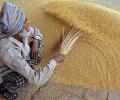
A head of its meeting, the Reserve Bank of India (RBI) can take some solace from the softening food commodity prices. However, the events surrounding the last few weeks show that the fall may not be uniform across all commodities, and cereals like wheat and rice could be the outliers. A Reuters report said that local wheat prices jumped to a record Rs 23,547 per tonne on Wednesday. That is a 12 per cent rise from the recent lows that followed the government's surprise ban on exports on May 14.

Most economists say the impact on inflation could be substantial, considering that steel prices rose by over 9 per cent in the past year.

Meet Dr Aaron K Chatterji whose academic research, policy work and public service has been recognised by the international nonprofit organisation.
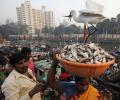
Food prices, which have contributed to a large part of inflation over recent years, have remained benign, despite unseasonal rain.

We have our own problems for sure and they are not trivial, but for now, our economy is in not too bad a shape, our politics is as personality-driven and authoritarian as that of most countries in the world. We must make the best of what we have and not be excessively unhappy looking at the grass on the other side of the septic tank which may not be greener after all!, observes Shreekant Sambrani.

'Did the Moneyball philosophy get redefined in the domain of the cash-rich IPL, which has become an integral part of the cricketing ecosystem?' asks Atanu Biswas.
While all real estate is local, not all property buyers are.

For Duflo and Banerjee, an important part of their work has been ensuring that the agency of the "beneficiaries" -- usually, in developing countries like India, poorer individuals -- is put at the centre of any policy design. This is a crucial way in which experimental results are often better than large scale data-based inference, says Mihir S Sharma.

India stands out as a poor and very unequal country, with the top 1 per cent of the population holding more than one-fifth of the total national income in 2021 and the bottom half just 13 per cent, according to a report. The report, titled ' World Inequality Report 2022', has been authored by Lucas Chancel, co-director of the World Inequality Lab, and coordinated by several experts, including French economist Thomas Piketty. It further said India is now among the most unequal countries in the world.

So, while it is great that India's numbers look relatively good, don't raise a cheer just yet, points out T N Ninan.

'The UPA's claim of growth at 9.5 percent was absolute nonsense and a fraudulent claim because the country did not grow; it was only statistical growth.' 'I do believe that when there is a determined leader who wants to bring a desired change, the system will begin acting. Today, people think there is policy paralysis, but there is functional paralysis also.' 'When things start moving, people will invest. Many companies are holding cash, many people are not investing. Nobody is making any move. Everybody is waiting for the elections to get over.' Economist and Swadeshi Jagran Manch convenor Swaminathan Gurumurthy in conversation with Shobha Warrier/Rediff.com

'The most important thing to do is to stop taxing citizens so brutally,' recommends T C A Srinivasa-Raghavan.

"I am very happy and proud of his achievements. I am yet to speak to him. I think he must be sleeping as it's still night in the United States," she said.

While a DFI will help banks derisk their loan portfolios, creation of a bad bank will clean up their balance sheets.

'He also understands and foresees potential challenges.'

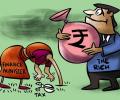
While the tax-to-GDP ratio of 9.88 per cent has been assumed for FY21, the same as last year, when it touched a decadal low, for FY22 a ratio of 10.7 per cent has been assumed, an average of the last five years.

Goldman Sachs forecasts real GDP growth to accelerate to 7.9 per cent in FY17 from a projected 7.5 per cent in FY16.
The pattern of economic growth in India is lop-sided, leaving a vast section of the society vulnerable, says an economist from Jawaharlal Nehru University.

India has remained obsessed with cheap capital and infrastructure spending when instead the central constraint on Indian development remains the abysmal quality of Indians' skills, says Mihir Sharma.

India's exports jumped 45.76 per cent to $33.28 billion in August on account of healthy growth in segments like engineering, petroleum products, gems and jewellery and chemicals, even as the trade deficit widened to a four-month high of $13.81 billion.
He takes over at Mint Road at a time when the governor's job is even less easy than it is normally.
